

CRI, light intensity, color temperature, depth of field... these are all concepts that can sometimes seem unclear on a surgical light technical data sheet.surgical lighting. However, understanding these criteria is essential for choosing the right lamp and ensuring optimal visibility in the operating room. Shadow elimination, laminar flow compliance, and advanced technologies Surgiris : all these elements contribute to the comfort and precision of the surgeon.
Understanding the challenges of surgical lighting
In an operating room, the quality of surgical lighting plays a decisive role in the precision of procedures, patient safety, and the visual comfort of the medical team. High-performance lighting must accurately reproduce colors, eliminate shadows, and provide uniform intensity, regardless of the conditions of the procedure.
To choose the right medical lighting, it is essential to know how to read and interpret the data on a technical data sheet. This information, often perceived as purely technical, nevertheless reflects concrete performance elements: color rendering, color temperature, light intensity, etc.
At Surgiris, a French designer and manufacturer of surgical lighting, each technical value corresponds to a specific clinical requirement. Understanding these parameters means guaranteeing surgeons precise and natural vision, thereby enhancing surgical performance.
1. IRC: an essential criterion for surgical lighting
TheCRI, or Color Rendering Index, measures the ability of a light source to accurately reproduce the natural colors of illuminated objects. Expressed as a value Ra, it ranges from 0 to 100: the higher the number, the closer the light is to natural daylight.
In the medical field, and more specifically in surgical lighting, this concept is essential. Surgeons must be able to accurately distinguish between different tissue shades and identify vascular areas or anatomical structures without color distortion. A CRI of less than 80 is considered insufficient for medical use, while high-end surgical lighting often exceeds 95 Ra, ensuring near-perfect color rendering.
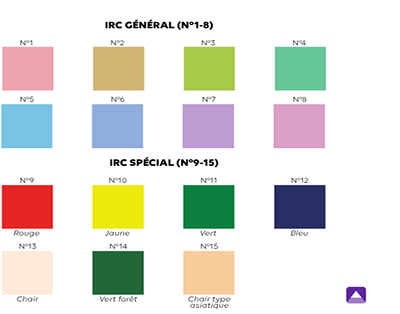
However, the classic IRC is based on eight standard colors (R1 to R8). However, certain colors that are critical for surgery are not included in this series:
- R9 (red): essential for viewing blood tissue and vessels.
- R13 and R15: correspond respectively to white skin tone and Asian skin tone, which are essential for dermatological or plastic surgery applications.
That is why Surgiris surgical lights, such as the XMT range, go beyond simple Ra 99 with an R9 of 99 and an R13 of 99, offering accurate and precise color rendering across the entire surgical field. This performance ensures the surgeon has a comfortable and balanced vision, reducing eye strain during long procedures.
By combining a high IRC with controlled light homogeneity, Surgiris guarantees optimal vision quality in the operating room, in line with the most stringent clinical requirements.
2. Light intensity and color temperature: controlling light in the operating room
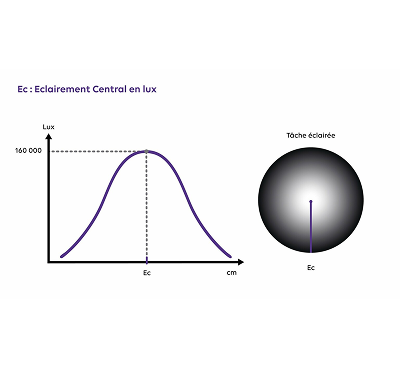
Thelight intensity is a fundamental parameter of any surgical lighting system. It determines the amount of light available on the surgical field and directly influences the precision of the surgeon's movements. This intensity is measured in lux, and the values vary according to the requirements of each procedure.
Thecentral illuminance, or Ec, corresponds to the maximum light density at the center of the operating field. In other words, it is the place where the light is most intense and where the surgeon's visibility is optimal. This value is measured in lux.
At Surgiris, our XMT and EPURE surgical lights EPURE offer a central illuminance (Ec) of 160,000 Lux, providing a powerful light source for critical areas.
Depth of field depth of field, denoted L1 + L2, refers to the distance over which the light remains sufficiently intense to allow the surgeon to work in good visual conditions.
It is measured in relation to central illuminance (Ec), i.e., the area where the light reaches its maximum intensity.
Two reference thresholds are used in photometric tests:
- At 60% Ec : corresponds to the area where the light remains at least 60% of its maximum power. This is the ideal working area, where the lighting is uniform and comfortable.
- At 20% Ec : indicates how far the light remains usable, even at the periphery or deep within the operating field. This reflects the the lamp's ability to penetrate deep, for example into abdominal or thoracic cavities.
These values are not theoretical: they are measured in the laboratory according to IEC 60601-2-41, based on the light distribution curve of each model.
For example:
- On the XMT range, the depth of field is 70 cm at 60% EC and 130 cm at 20% Ec.
- On the EPURE rangerange, it reaches 69 cm at 60% Ec and 136 cm at 20% Ec.
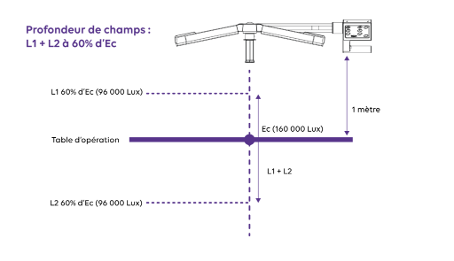
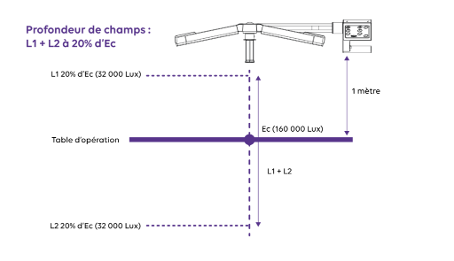
These results demonstrate the ability of Surgiris lighting to maintain stable and consistent light intensity at great depths, ensuring optimal visibility regardless of the surgeon's position or the nature of the procedure.
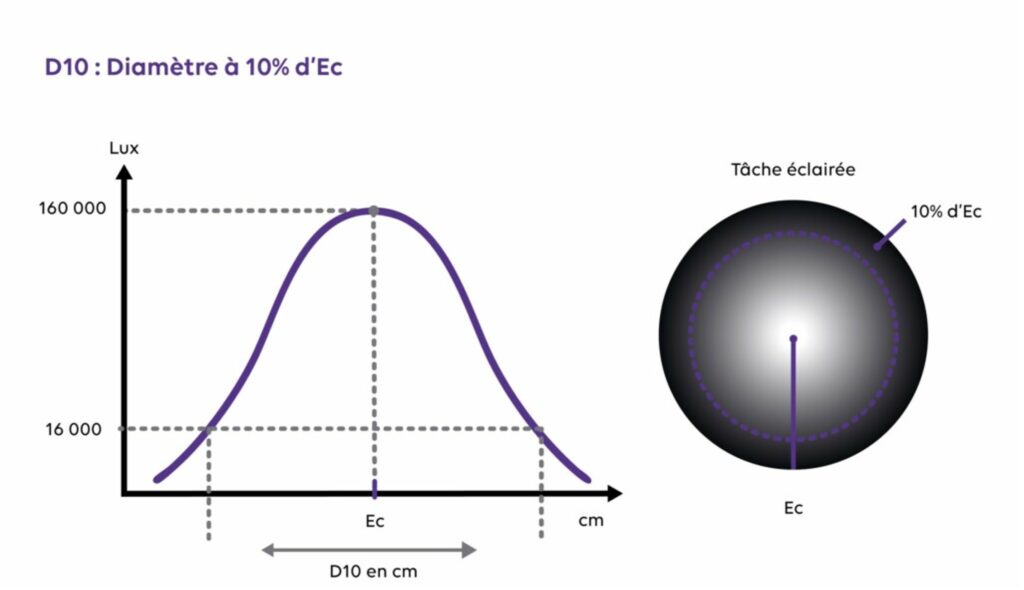
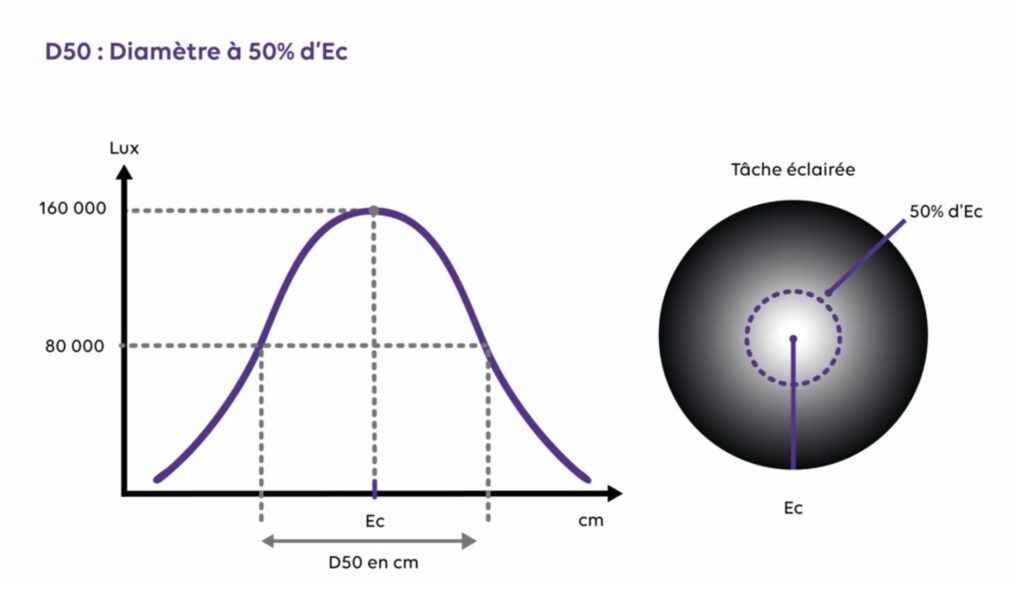
These figures show that both ranges offer wide light coverage, adapted to the size of the surgical field, while maintaining high intensity at the center of the beam. This allows the surgeon to precisely adjust the illuminated area, depending on the type of procedure and the level of detail required.
The diameter of the light field indicates the area actually illuminated by the surgical light. It is measured according to two reference values, D10 and D50, determined from the central light intensity (Ec).
- D50 corresponds to the diameter of the light core, i.e., the area where the intensity remains at 50% of the central illuminance. This is the most concentrated and homogeneous part of the beam.
- D10 corresponds to the total diameter of the operating field, i.e., the area where the light intensity drops to 10% of the central illuminance. This measurement defines the outer limit of the light beam.
These two values are essential for assessing the size of the surgical field actually covered and the distribution of light. A good balance between D10 and D50 ensures uniform light without shadows, while avoiding a beam that is too wide or too concentrated.
The values differ slightly depending on the optical design of each model:
- X3MT lighting: D10 = 33 cm, D50 = 17 cm
- EPURE lighting: D10 = 27 cm, D50 = 18 cm
Color temperature, expressed in Kelvin (K), characterizes the visual hue of the light emitted by surgical lighting.
It directly influences color perception, visual contrast, and the comfort of the practitioner in the operating room.
- A low temperature (around 3,500 K) produces a warm, slightly amber light. It is gentler on the eyes and reduces visual fatigue during long procedures.
- A high temperature (around 5,000 K) corresponds to cold light, close to natural daylight. It promotes visual accuracy and fine distinction between fabrics.
The two Surgiris XMT and EPURE surgical lighting ranges offer the same color temperature adjustment range:
3,500 K – 4,000 K – 4,500 K – 5,000 K
This flexibility allows the surgeon to select the light shade best suited to each specialty or personal preference:
- Warmer light for long surgeries or procedures requiring increased eye comfort.
- A cooler light for disciplines where contrast sensitivity and tissue differentiation are priorities, such as vascular or plastic surgery.
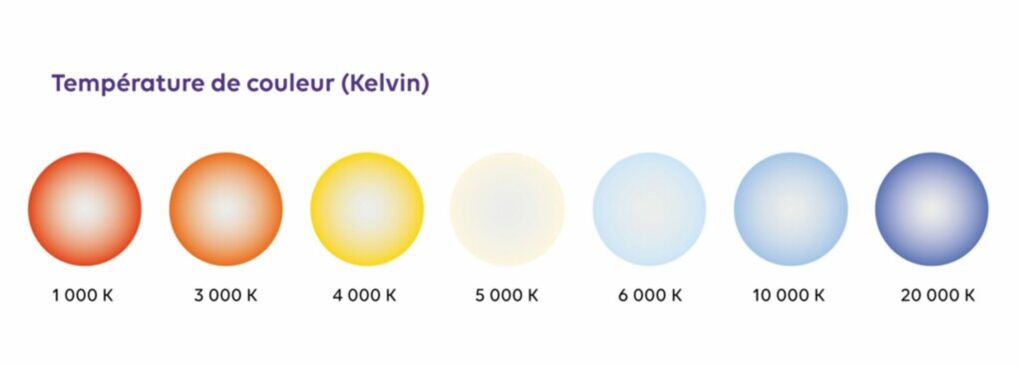
The ability to adjust the color temperature on the XMT and EPURE ranges EPURE customized surgical lighting that is both high-performance and ergonomic, while ensuring visual comfort for the practitioner.
3. Advanced technologies: performance and comfort in the operating room
Choosing surgical lighting is not just a matter of checkingthe CRI,central illuminance, depth of field, or beam diameter. Two other essential criteria guarantee optimal quality in the operating room:
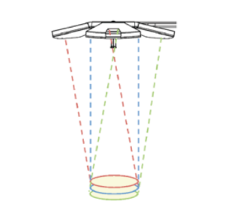
In an operating room, shadows on the surgical field can impair the surgeon's visibility and increase the risk of errors. Shadow elimination is therefore an essential criterion for effective surgical lighting. It ensures that even when obstacles—such as heads or instruments—are between the light source and the surgical area, the light remains consistent and uniform.
Thanks to the unique technology of superimposing light beams in Surgiris lamps, each module diffuses its light independently, creating a uniform beam with no shadow areas. This design ensures optimal visibility, reducing visual fatigue and enabling precise movements throughout the procedure.
Laminar flow refers to the circulation of sterile air in an operating room. It is designed to prevent contamination of the surgical field by particles or bacteria. Any excessive disturbance of this flow can compromise hygiene and increase the risk of post-operative infections.
Any lighting installed in the room can disrupt it, which is why DIN 1946-4 recommends that the maximum disruption to the laminar flow should not exceed 37.5%.
Laminar flow disruption measures the effect of lighting on this air movement: the lower the percentage, the less the lighting interferes with the circulation of sterile air. Surgiris lighting systems comply fully with this requirement:
At Surgiris, the design of the XMT and EPURE lamps EPURE this criterion into account:
- XMT: 28% laminar flow disruption, which significantly limits particle dispersion and ensures a safe environment.
- EPURE : 32% disruption of laminar flow, while maintaining powerful, uniform lighting.
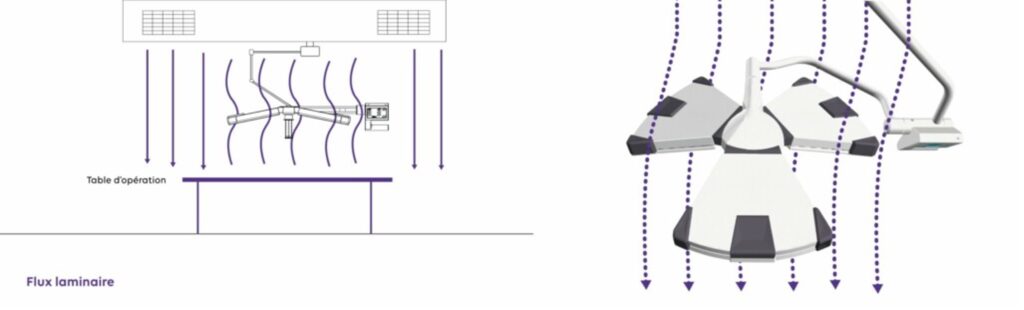
These values ensure that sterile air circulates efficiently while maintaining maximum light intensity at the center of the surgical field, guaranteeing both safety and visibility.
In addition to standard features such as good R9, high Ec, and adequate depth of field, Surgiris also offers advanced patented technologies to improve comfort, precision, and reliability in the operating room:
- FOCUSMATIC: electronic focusing of the light field without loss of intensity.
- MOTION MATIC: contactless adjustments, directly in the sterile zone.
- EFA, CCL, APM, and WCT: algorithms and systems that guarantee color rendering stability, performance durability, and wireless control.
To discover all the advanced features and related patents, you can read our dedicated article.
Do you have a project? Please feel free to contactour sales department.