
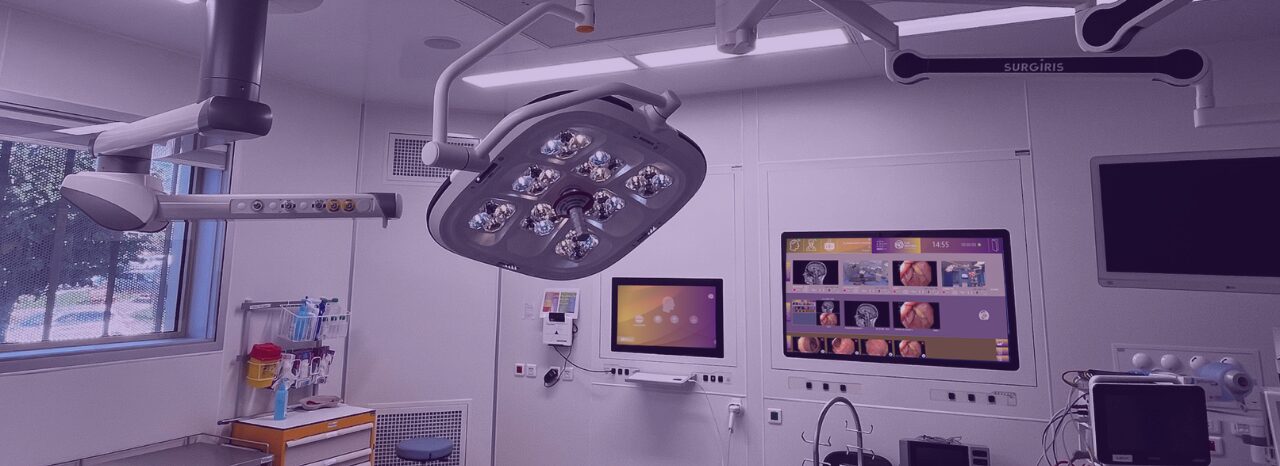
Operating room video integration has become an essential pillar of digital transformation in hospitals. Thanks to the modernization of surgical infrastructure, medical teams now have advanced solutions that improve communication, training, and real-time information sharing. Whether it's video management in the operating room, real-time medical video streaming, or advanced surgical video flow control, these innovations are redefining practices and helping to optimize the quality of care.
In this article, we will look at how the use of video helps to strengthen collaboration between healthcare professionals and significantly improves medical training. We will also discuss the benefits of technological solutions such as operating room video systems, video management platforms, and the integration of 4K surgical cameras.
Enhanced hospital collaboration thanks to video integration in the operating room
Real-time broadcasting for better intra-hospital communication
Operating room video integration enables the direct and secure transmission of medical videos in real time to other rooms, lecture halls, meeting rooms, or monitoring stations. Thanks to this technology, medical teams can follow the progress of a procedure live via an operating room video system that is fully integrated into the hospital network.
This video streaming in the operating room promotes effective collaboration. Surgeons can seek the expertise of their colleagues remotely, share observations instantly, and coordinate their actions. Simultaneous viewing of endoscopic video sources, scans, or images from an integrated surgical camera improves decision-making.
New infrastructure based on surgical video routing, medical video matrices, and medical AV over IP architectures makes it possible to interconnect the entire operating room. This connectivity optimizes team responsiveness, particularly in situations requiring urgent collaboration.
Centralized control of video streams to streamline the surgical workflow
The implementation of a video management platform in the operating room or a medical VMS (video management system) allows for the centralization and orchestration of all images produced by the devices in the operating room. This centralization facilitates the selection and distribution of streams, whether they are surgical 4K video footage of the operating field, endoscopic images, or medical imaging screens.
Thanks to the integration of a video management system for hospitals, surgeons and biomedical technicians have intuitive access to various multimedia streams. This fluid organization simplifies the surgical process and reduces technical manipulations, allowing teams to focus on what matters most: patient care.
One of the great advantages of modern surgical video routing is the ability to quickly configure predefined scenarios. With just a few clicks, staff can select the desired video sources and stream them to screens in the operating room or to an observation room. This flexibility greatly improves overall workflow and minimizes the risk of errors.
Video in medical training: an essential educational tool
An educational immersion thanks to high-definition video
Medical training is undergoing a transformation thanks to the rise ofoperating room video integration technologies. Images provided by 4K surgical video devices capture every detail of the procedure, offering students and interns an exceptional immersive experience.
Surgical video solutions enable operations to be recorded, annotated, and then broadcast for educational purposes. This video documentation transforms learning, as it makes visible procedures and techniques that are often difficult to observe in real-life conditions.
Thanks to hospital IP video, streams can be viewed from any authorized workstation within the hospital, making it easier for students to access training content. The medical video platform thus becomes a veritable educational library.
Multi-source video integration technologiesfor surgery also make it possible to juxtapose multiple views: operating room camera, endoscope, radiological imaging, etc. This is a valuable approach for understanding the different stages and challenges of a surgical procedure.
Distance learning and surgical telecollaboration
The rise of secure video streaming in operating rooms and medical telecollaboration solutions is enabling hospitals to expand the reach of their training programs. Experts can participate in, observe, or comment on a procedure remotely, while ensuring the security and confidentiality of the streams.
Video tools to improve medical communication video tools for improving medical communication play a key role in the continuing education of healthcare personnel. Surgeons can benefit from real-time external advice, conduct remote supervision, or organize feedback sessions that are highly educational.
The design of a connected operating room finally makes it possible to share live procedures on a national or even international scale. Online conferences, symposiums, and demonstration workshops are becoming more interactive thanks to the high quality of surgical video streams.
This ability to learn remotely is a valuable asset for hospitals seeking to enhance their appeal, develop academic partnerships, or improve the skills of their teams.
Video integration in the operating room: a strategic asset for modernizing hospitals
Video integration in operating rooms is now an essential technology for healthcare facilities. By enabling video management in operating rooms, real-time broadcasting, secure sharing of streams, and the use of high-definition medical videos, it simultaneously strengthens collaboration between healthcare professionals and the quality of medical training.
Thanks to innovations such as medical VMS, surgical video routing, surgical video solutions, and medical video platforms, hospitals can modernize their infrastructure, streamline their processes, and offer richer, more immersive teaching experiences.
Video is no longer just a tool: it is now a strategic pillar for improving clinical performance, knowledge transfer, and cooperation within the hospital environment.