
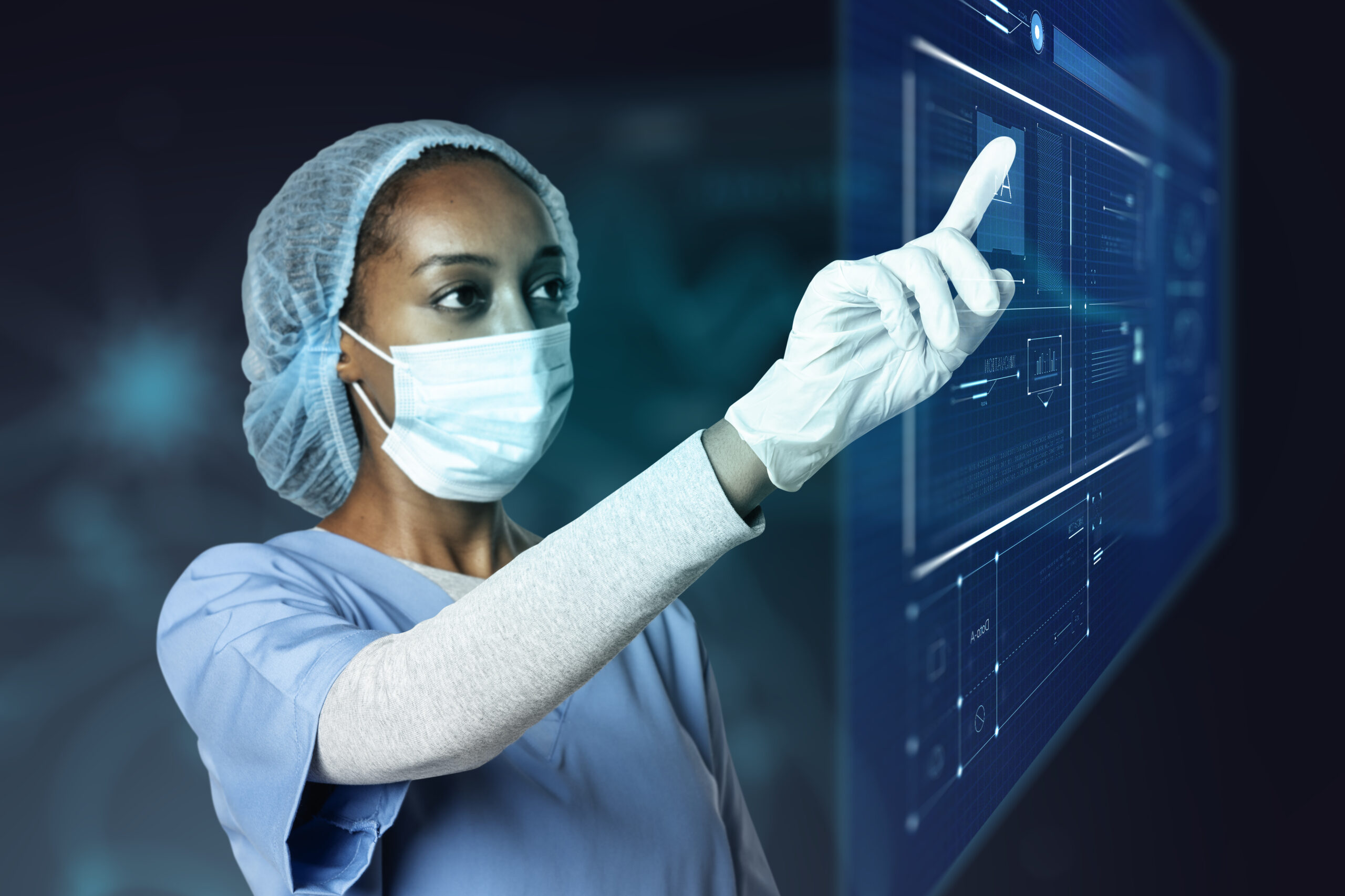
In an environment as demanding as the operating room, every detail counts. Precision in technique, team coordination, and information management are essential to ensuring patient safety and the effectiveness of procedures.
Today, video management in the operating room has become an essential technology for addressing these challenges.
Why has video management become essential in the operating room?
Modern operating rooms generate a significant amount of visual data: endoscopic cameras, surgical microscopes, medical imaging, etc.
Without a centralized system, these data streams can quickly become difficult to manage:
- The proliferation of screens
- Loss of critical information
- Risk of human error
Video management allows these feeds to be centralized, organized, and streamed in real time, providing a clear and structured view of the operation.
Enhancing patient safety through video management
Surgical safety depends largely on the quality of the available information. Misinterpretation or a lack of clarity can have serious consequences.
Better visualization for more confident decisions
Thanks to optimized image delivery:
- All stakeholders have access to the same information
- Critical areas are better identified
- Decisions are made more quickly
Reducing human error
A high-performance video management system enables:
- Avoid unnecessary handling
- To minimize interruptions during the procedure
- To standardize procedures
The result: a more secure and reliable environment.
Improving the efficiency of surgical teams
Beyond security, video management is a powerful tool for improving performance.
Improved coordination
Medical teams are working more seamlessly together:
- Instant image sharing
- Easier communication
- Reduction in downtime
A valuable time-saver
By centralizing video streams:
- Fewer technical steps
- Quick access to image sources
- Simplified installation
This allows surgeons to focus fully on their core work.
A key tool for training and collaboration
Video management isn't limited to real-time intervention. It also plays a major role in:
Training for healthcare professionals
- Recording of presentations
- Analysis of Practices
- Continuous improvement
Remote collaboration
- Remote Support
- Real-time sharing with other experts
- Advances in Connected Surgery
Toward a Smart, Connected Operating Room
The integration of video management is part of a broader transformation: that of the digital operating room.
When combined with other technologies (smart lighting, integrated systems, data management), it enables:
- Create an ergonomic work environment
- Improve the traceability of interventions
- Optimize the facility's overall performance
Why choose a suitable video management solution?
Not all systems are created equal. To maximize benefits, it is essential to choose a solution:
- Intuitive and easy to use
- Compatible with existing equipment
- Scalable to meet the needs of the operating room
At Surgiris, we design solutions tailored for healthcare professionals, combining performance, reliability, and ease of use.
Conclusion
Video management in the operating room is no longer just a technological tool; it is a cornerstone of surgical safety and efficiency.
By improving visibility, coordination, and information management, it directly contributes to better patient outcomes and optimized working conditions for medical teams.