
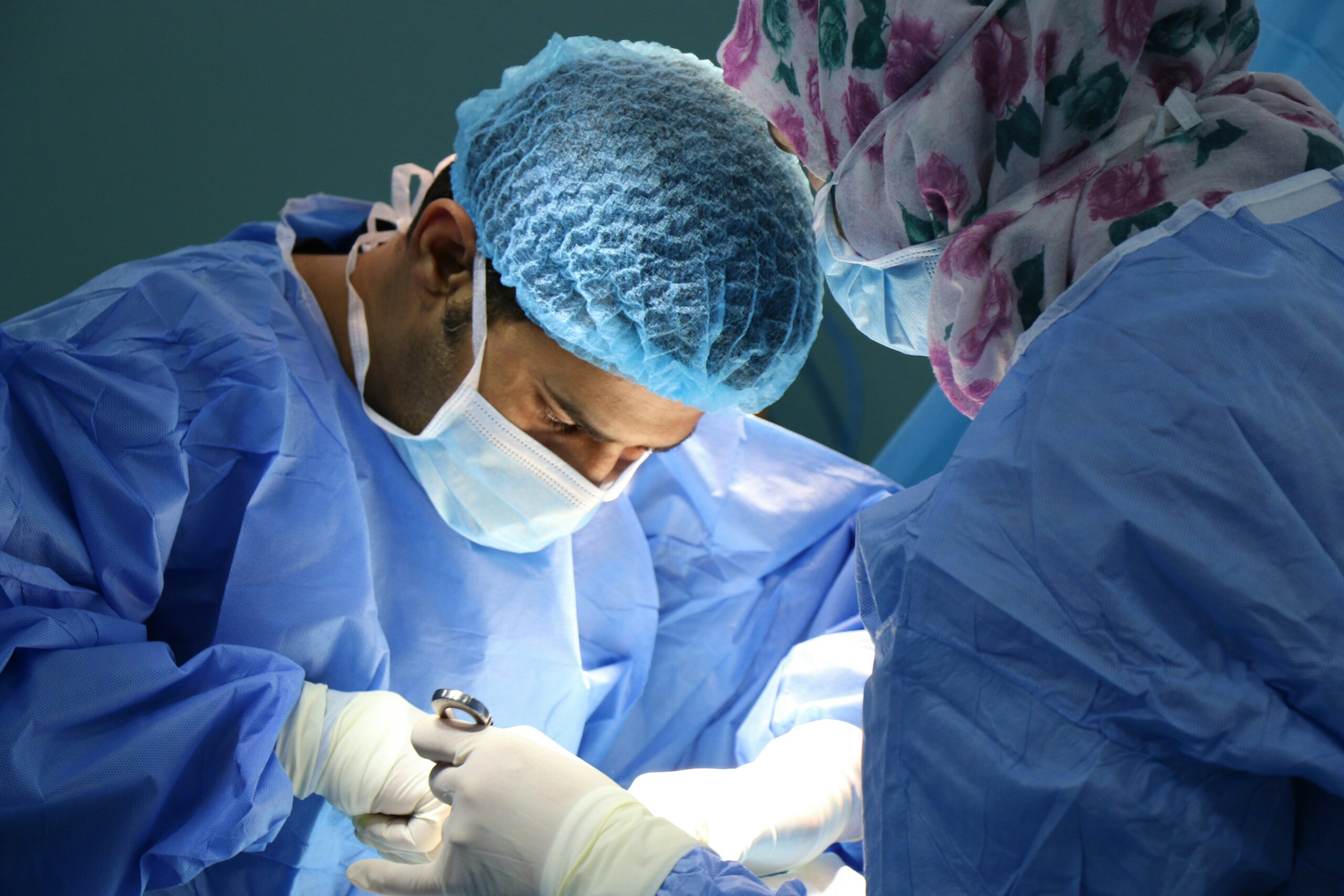
Operating on the wrong patient. Operating on the wrong site. These scenarios, classified as "never events" by the Haute Autorité de Santé, continue to occur in France despite the HAS’s official checklist. The reason? Patient identification remains too often a manual process, prone to interruptions and human error. Technology has caught up: here’s why integrated integrated video management systems are now the most robust solution.
Why patient identification remains a critical challenge in surgery
Patient identification refers to the set of measures designed to ensure that a medical procedure is performed on the right patient, in the right place, at the right time. In the operating room, the stakes are highest: a patient identification error can result in the loss of a healthy organ, exacerbate an existing condition, or even be life-threatening.
According to data from the HAS, errors related to patient identification are one of the leading causesof serious adverse events (SAEs) in the operating room. The surgical checklist, while effective, is not infallible when it relies solely on verbal confirmations in a high-stress environment.
The operating environment amplifies risks: rapid staff rotations, caring for multiple patients simultaneously, pressure to meet cycle times… In this context, relying solely on memory or verbal reports from healthcare providers leaves the system vulnerable to systemic failures.
68%
Serious adverse events in surgery often involve organizational or communication failures
1 in 3
Identity errors occur despite the use of a checklist (WHO, retrospective studies)
-80%
reduction in identity errors observed with automated barcode verification
The HAS checklist: necessary but insufficient
Introduced in France in 2010, the “Patient Safety in the Operating Room” checklist has proven its worth. It organizes the checks into three stages: before induction of anesthesia, before the incision, and at the end of the procedure. However, it has several structural limitations:
Purely declaratory verification
The patient’s identity is confirmed verbally. If an initial error occurs during preparation or if the wrong medical record is used, the checklist does not detect the error.
No automatic tracking
A checklist completed on paper or in HR software does not automatically link the images and data generated during the procedure to the patient’s verified identity.
Risk of compromised compliance
When under time pressure or in an emergency, teams may cut corners during checks. Automation eliminates this reliance on human behavior.
Are you assessing your identity theft risks? Our experts can provide you with a video management solution.
Video management: a technological safety net
Modern video management systems in the operating room are no longer limited to capturing and displaying surgical images. Today, they constitute a centralized digital infrastructure that secures the entire patient journey, from the opening of the operating room to the closure of the medical record.
That is exactly what the ICN ICN , developed and integrated by Surgiris into its video systems for operating rooms.
“In a modern operating room, each procedure involves about ten video and imaging sources. Without a centralized integration system, there is a real risk of desynchronization between patient data and surgical images—with direct consequences for traceability and safety.”
How ICN Patient Identity Ensures Secure Identification
The ICN Patient Identity module, integrated into Surgiris multimedia stations, relies on automated verification via a barcode scanner (ANAP-compliant patient wristband). Specifically:
Active verification upon room opening
Scanning the patient wristband triggers an automatic retrieval of the medical record from the hospital information system and verifies that it matches the scheduled procedure form.
Automatic linking of images to a folder
All images and videos captured during the procedure are automatically linked to the patient’s verified identity in real time.
DICOM/HL7 Interoperability
Data is transferred to the hospital's PACS system in standard formats. No need to re-enter data, and no risk of errors from copying and pasting identifiers.
Time-stamped traceability report
ICN Report automatically generates a report that links verified identities, a list of images, the devices used, and the participants. Available upon room closure.
Beyond Identification: Comprehensive Safety in Surgical Procedures
ID monitoring is the cornerstone, but Surgiris video management offers much more security:
Traceability of Implantable Medical Devices (IMDs)
Time-stamped video recordings of procedures provide proof that a specific implant (batch number, manufacturer) was indeed used during a procedure involving an identified patient. This is an increasing requirement under the European Medical Device Regulation (MDR) 2017/745.
Managing "time-outs" and surgical breaks
The system can be configured to trigger a visual and audible alert at key steps in the checklist, ensuring that they are actually completed and automatically recorded in the file.
Real-time detection of discrepancies
If the data scanned from the wristband does not match the surgical schedule loaded from the HIS, the workstation immediately displays a blocking alert. The team cannot bypass the verification.
Concrete result: In facilities equipped with an automated patient identity verification system in the operating room, studies show a significant reduction in discrepancies detected at the start of surgery—proving that errors do occur and that the technology catches them before they become incidents.
Video-based management and HAS certification: an asset for accreditation
The HAS now includes digital maturity and document management in the operating room among its certification criteria. An operating room equipped with a traceable, interoperable, and auditable video management system provides objective evidence of compliance that manual systems cannot provide.
Healthcare facilities that invest in these solutions thus enjoy a twofold benefit: enhanced patient safety and documented audit capabilities for regulatory authorities.
Good to know: Surgiris’ ICN systems are listed with UGAP, UNIHA, and RESAH, which significantly simplifies the purchasing process for public institutions and member private groups.
How to deploy a video management system designed for identity surveillance?
Setting up a system like this can’t be done on the fly. Here are the recommended steps for a successful rollout:
Audit of the current system and workflows
Map video sources (endoscopes, microscopes, ceiling-mounted cameras), specialized software (HIS, PACS), and current identity verification workflows.
Definition of Interoperability Interfaces
Verify the connection between the video station and the HIS via HL7 and the PACS via DICOM. Check compatibility with the patient wristbands in use (Code 39, Code 128, QR).
Team setup and training
The deployment of Surgiris stations is carried out in coordination with biomedical and IT teams. The interfaces are designed to be up and running in just a few hours.
Tracking and Analysis of Discrepancies
ICN Storage enables the retrospective analysis of all patient identification alerts, the identification of error patterns, and the support of the facility’s quality improvement efforts.
Is your department at risk of patient misidentification?
Our biomedical engineers will analyze your current setup and offer a demonstration of ICN solutions tailored to your configuration.
What pioneering institutions are actually doing in the field of connected video management
Hospitals in Rennes and Paris have taken the plunge into connected operating rooms. Their feedback points to the same key takeaways:
3 key takeaways from the pioneering courses on connected video management:
1. Teams’ initial resistance turns into enthusiasm as soon as the system saves them time on documentation.
2. In the first year, the number of discrepancies identified increases, not because errors are on the rise, but because they are finally being detected.
3. Improved video traceability significantly reduces medical-legal disputes, as teams have objective evidence that procedures were performed correctly.
Conclusion: Identity monitoring can no longer rely solely on human intervention
The growing complexity of operating rooms, pressure to reduce cycle times, and the proliferation of data sources make a technology-driven approach to identity monitoring essential. Video management is no longer a luxury—it is a security infrastructure.
Surgiris designs and manufactures solutions in France that integrate seamlessly into your workflows, connect to your existing systems (HIS, PACS), and allow your teams to focus on what matters most: the surgical procedure.
The question is no longer whether your firm needs these tools—but how much longer you can afford to do without them.
Ready to secure your operating room?
Contact our experts for a personalized assessment and a presentation of our integrated ICN solutions.